
Assessment in Campbelltown
General Information: This information is general in nature and does not replace individual medical advice. Not every person with fatty liver requires FibroScan, specialist consultation or surgery. Investigation and treatment recommendations depend on the person’s medical history, examination and existing results. FibroScan has limitations, and further testing or specialist referral may sometimes be required. Treatment outcomes vary between patients. This service is intended for adult patients. Children and adolescents with suspected fatty liver disease should be assessed through their GP and an appropriate paediatric service. |
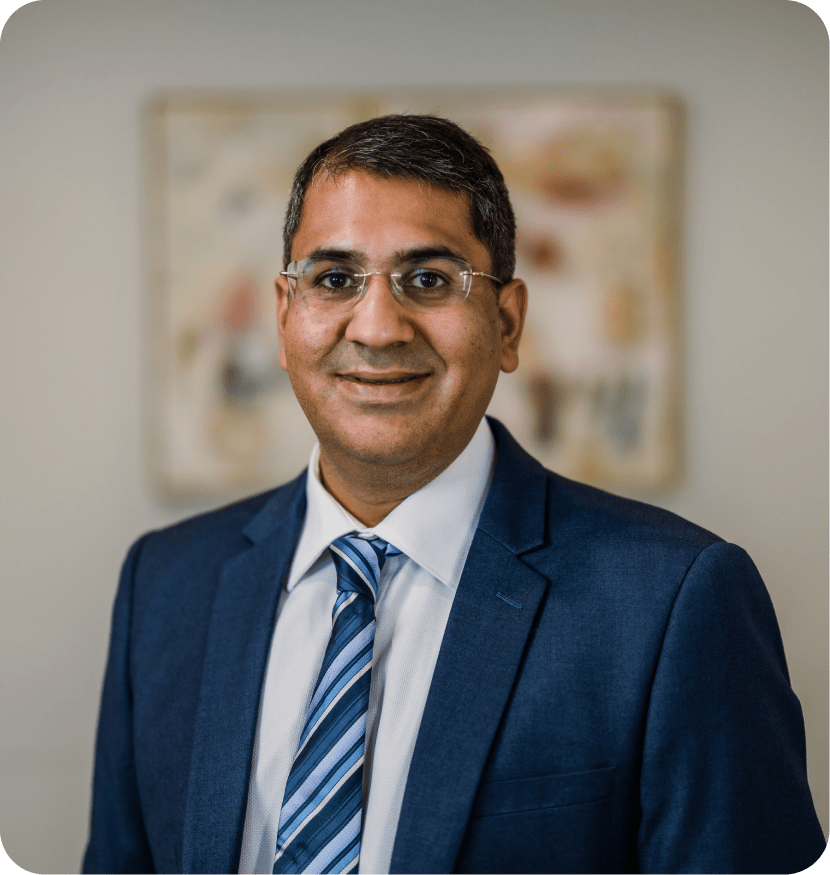
Dr Devesh Kaushal is a specialist general surgeon and Fellow of the Royal Australasian College of Surgeons, with experience in general, upper gastrointestinal and bariatric surgery. He provides initial assessment of adult patients with obesity-related metabolic and surgical conditions, including fatty liver disease (MASLD). Patients with advanced fibrosis, suspected cirrhosis, or diagnostic uncertainty may be referred to a gastroenterologist or hepatologist for specialist liver management.
Assessment at this service may include clinical review, blood tests, FibroScan, and guidance on lifestyle modification and metabolic risk factor management — coordinated with the patient’s GP and, where appropriate, other specialists.
Campbelltown Consulting Rooms — 4 Hyde Parade, Campbelltown NSW 2560 A GP referral is recommended and is required to claim an eligible Medicare rebate for the specialist consultation. Please contact the rooms for current fees, FibroScan availability and booking information. (02) 7906 8312 | drdeveshkaushal.com.au |
Metabolic dysfunction-associated steatotic liver disease — MASLD, previously known as non-alcoholic fatty liver disease or NAFLD — occurs when excess fat accumulates in the liver in association with metabolic risk factors. It is one of the most common liver conditions in Australia, affecting a substantial proportion of adults, though many remain undiagnosed because the condition usually causes no symptoms in its early stages.
A related condition, metabolic dysfunction-associated steatohepatitis refers to fat accumulation accompanied by inflammation and liver cell injury. MASH carries a higher risk of progression to fibrosis and cirrhosis than simple steatosis.
There is also alcohol-associated liver disease, where excessive alcohol intake is the primary driver. Management differs from MASLD and centres on reducing or stopping alcohol consumption.
In some patients, liver fat is accompanied by inflammation and may gradually lead to fibrosis or cirrhosis. Many people do not progress, particularly when metabolic risk factors are identified and addressed. The following outlines the general spectrum of the condition:
Stage 1 | Steatosis — Fat Accumulation Excess fat in liver cells without significant inflammation. Fatty liver disease usually causes no symptoms at this stage. Early liver fat accumulation can often improve substantially with sustained weight loss, regular physical activity, and management of associated metabolic conditions. |
Stage 2 | MASH — Inflammation and Cell Injury Fat accumulation accompanied by inflammation and liver cell injury. May progress to fibrosis in some patients, but can also improve with sustained lifestyle change. Results vary between patients. |
Stage 3 | Fibrosis — Scar Tissue Chronic inflammation leads to progressive scar tissue formation. FibroScan can help estimate the likelihood of significant fibrosis, though further investigation may be required. Some improvement in fibrosis may be possible with sustained management. |
Stage 4 | Cirrhosis — Advanced Scarring Extensive scarring with impaired liver function. At this stage, referral to a hepatologist or gastroenterologist is required. Patients with suspected cirrhosis should not rely on this assessment service alone. |
Fatty liver disease usually causes no symptoms in its early stages. Some people report fatigue or discomfort under the right ribs, although these symptoms are non-specific and may have other causes. Advanced disease — fibrosis or cirrhosis — may be associated with symptoms such as jaundice, abdominal swelling, or easy bruising, but these warrant urgent medical review and are beyond the scope of this assessment service.
Because the condition is often asymptomatic, it is frequently identified through elevated liver enzymes on a routine blood test or through a fatty liver appearance on ultrasound performed for another reason.
Further assessment may be appropriate for adults with persistently abnormal liver tests, fatty liver reported on imaging, or a combination of metabolic risk factors. The need for specialist assessment and FibroScan should be determined individually after medical review — a single risk factor does not automatically mean investigation is required.
Fatty liver disease is commonly associated with obesity, type 2 diabetes, high blood pressure, and abnormal cholesterol. Risk varies between individuals and cannot be determined by postcode, ethnicity, or body weight alone. Assessment should be guided by clinical findings and the individual’s medical history.
Discuss with your GP whether a referral for specialist assessment is appropriate in your individual circumstances.
Assessment at this service typically involves a combination of the following, tailored to the individual patient’s history and existing results:
A review of medical history, medications, alcohol intake, metabolic risk factors, family history, and any previous investigations. Current medicines should be reviewed as part of the assessment. Patients should not stop or change prescribed medication without discussing it with their treating doctor.
Blood tests are selected according to the individual patient’s history and existing results. They may include liver tests, platelet count, glucose or HbA1c, cholesterol, and tests for alternative causes of liver abnormalities where indicated. Initial assessment commonly includes review of routine blood tests and calculation of a non-invasive fibrosis score such as FIB-4, which helps determine whether further investigation with FibroScan is likely to be useful.
Ultrasound may show features suggesting moderate or marked liver fat, but it is less sensitive for mild disease and does not reliably determine the degree of fibrosis. Where ultrasound has already been performed, the report will be reviewed as part of the assessment.
FibroScan is a non-invasive test that estimates liver stiffness and liver fat content. It can help assess the likelihood of significant fibrosis, but the result must be interpreted alongside the patient’s history, blood tests, and imaging. FibroScan does not independently diagnose MASH and does not always provide an exact fibrosis stage.
Results can be affected by body weight, recent food intake, inflammation, and other clinical factors. Interpretive ranges vary according to the underlying liver condition and individual clinical circumstances. Dr Kaushal will explain the result in the context of the patient’s other investigations.
FibroScan may be recommended when initial blood-based assessment suggests further evaluation is appropriate. It is not required for every patient.
FibroScan fees: A valid GP referral may allow a Medicare rebate for the specialist consultation. Please contact the rooms for current FibroScan fees and information about any applicable rebate. Consultation fees, out-of-pocket costs, and rebate entitlements should be confirmed before booking. |
There is currently no medication specifically approved in Australia for the treatment of MASLD or MASH. Management centres on addressing the underlying metabolic risk factors — particularly through lifestyle modification — with additional interventions considered on an individual basis.
Early liver fat accumulation can often improve substantially with sustained weight loss, regular physical activity, and management of associated metabolic conditions. A reduction in body weight of 7 to 10 percent has been associated with improvement in liver inflammation in some studies, though results vary between patients. A balanced diet low in refined carbohydrates and added sugars, combined with regular physical activity, forms the basis of management for most patients.
Alcohol intake should be discussed with the treating doctor. Reducing alcohol is generally advisable, and people with advanced fibrosis or cirrhosis are usually advised to avoid alcohol.
Optimising blood sugar, blood pressure, and cholesterol — through lifestyle change and appropriate medication where indicated — is an important part of reducing the metabolic drivers of liver disease. This is coordinated with the patient’s GP and other specialists as required.
For appropriately selected patients with obesity and associated metabolic disease, bariatric surgery may assist with sustained weight loss and may improve liver and metabolic health. Surgery is not suitable for everyone and carries operative and long-term risks including bleeding, anastomotic leak, blood clots, reflux, nutritional deficiencies, weight regain, and the need for lifelong follow-up. Suitability requires individual assessment, and outcomes vary between patients.
Bariatric surgery is one possible option for selected patients — it should not be considered unless non-surgical approaches have been adequately explored and the patient meets recognised eligibility criteria. Dr Kaushal provides bariatric surgery assessment at the same service, but this is arranged separately and subject to individual clinical assessment.
Some observational studies have associated higher coffee consumption with lower rates of liver fibrosis, but coffee is not a treatment for fatty liver disease and may not be suitable for everyone. Individual dietary advice should be sought from a dietitian.
Patients with findings suggesting advanced fibrosis, suspected cirrhosis, or diagnostic uncertainty will be referred to a gastroenterologist or hepatologist for specialist liver management. This service does not replace hepatology or gastroenterology care for patients with significant liver disease.
Dr Devesh Kaushal is a specialist general surgeon and Fellow of the Royal Australasian College of Surgeons, with more than 15 years of experience in general and upper gastrointestinal surgical practice. He is an author and co-author of peer-reviewed research in general surgery and surgical quality improvement.
This service provides initial assessment and management guidance for adult patients with fatty liver disease and associated metabolic conditions. It does not constitute a hepatology or gastroenterology specialist service. Patients who require specialist liver care will be referred to an appropriate specialist.
The service is available at 4 Hyde Parade, Campbelltown NSW 2560, serving patients from the Campbelltown and Macarthur region. Operating privileges are held at Sydney Southwest Private Hospital Liverpool, Campbelltown Public Hospital, Campbelltown Private Hospital, and The George Hospital.
1. What is fatty liver disease? Fatty liver disease — now termed metabolic dysfunction-associated steatotic liver disease (MASLD), previously known as NAFLD — occurs when excess fat accumulates in the liver in association with metabolic risk factors. It is common and often has no symptoms. |
2. Does fatty liver disease always cause symptoms? Usually not. Most people with fatty liver disease have no symptoms, particularly in the early stages. Some may notice fatigue or mild discomfort under the right ribs, but these symptoms are non-specific. The condition is often detected incidentally through blood tests or ultrasound. |
3. How is fatty liver disease assessed? Assessment typically begins with a review of blood tests — including liver enzymes, platelet count, and a non-invasive fibrosis score such as FIB-4. Ultrasound and FibroScan may also be used. The combination of tests, medical history, and clinical findings guides further management. Not every patient requires all investigations. |
4. What is FibroScan and what can it tell me? FibroScan is a non-invasive test that estimates liver stiffness and liver fat content. It can help assess the likelihood of significant fibrosis. It is not a definitive diagnosis by itself — results must be interpreted alongside other investigations and clinical history. |
5. What are the limitations of FibroScan? FibroScan results can be affected by body weight, recent food intake, liver inflammation, and other clinical factors. Interpretive ranges vary depending on the underlying liver condition and individual circumstances. In some patients, FibroScan results are unreliable and further investigation may be required. |
6. Can fatty liver disease improve? Early liver fat accumulation can often improve substantially with sustained weight loss, regular physical activity, and management of metabolic conditions. Results vary between patients. Reversal of advanced fibrosis or cirrhosis is not reliably achieved. |
7. When is referral to a hepatologist required? Patients with findings suggesting advanced fibrosis, suspected cirrhosis, or diagnostic uncertainty will be referred to a gastroenterologist or hepatologist. This service is appropriate for initial assessment — it does not replace specialist hepatology or gastroenterology care. |
8. Can weight-loss treatment or surgery help? For appropriately selected patients with obesity and metabolic disease, bariatric surgery may assist with sustained weight loss and may improve liver and metabolic health. It is not suitable for everyone, carries operative risks, and requires individual assessment. Suitability is discussed at a separate surgical consultation. |
9. Do I need a GP referral? A GP referral is recommended for initial assessment. It is required to claim an eligible Medicare rebate for the specialist consultation. Patients who do not have a GP referral should contact the rooms to discuss whether a self-referral appointment can be arranged. |
10. What are the fees? Please contact the rooms directly at (02) 7906 8312 or [email protected] for current consultation fees, FibroScan fees, and information about Medicare rebates and out-of-pocket costs. Fee information is not published on this page as it may change. |
Appointments are available at the Campbelltown consulting rooms. A GP referral is recommended and is required to claim an eligible Medicare rebate for the specialist consultation. Please contact the rooms for current fees, FibroScan availability and booking information.
Dr Devesh Kaushal — Campbelltown Consulting Rooms 4 Hyde Parade, Campbelltown NSW 2560 Phone: (02) 7906 8312 Email: [email protected] Website: drdeveshkaushal.com.au Office Hours: Monday – Friday, 9:00 AM – 5:00 PM Operating at: Sydney Southwest Private Hospital Liverpool | Campbelltown Public & Private Hospital | The George Hospital |
Disclaimer: This information is general in nature and does not replace individual medical advice. Not every person with fatty liver requires FibroScan, specialist consultation or surgery. Investigation and treatment recommendations depend on the person’s medical history, examination and existing results. FibroScan has limitations, and further testing or specialist referral may sometimes be required. Treatment outcomes vary between patients. Testimonials: This page does not contain patient testimonials or treatment outcome comments. If you have been directed to this page by a review, the content of that review does not form part of this service’s published information. Information reviewed: August 2026. This page is reviewed periodically for accuracy in disease terminology, treatment recommendations, Medicare arrangements, and AHPRA advertising compliance. |