
A colonoscopy is one of the most important and effective diagnostic procedures in upper GI and digestive health. It provides a direct, real-time view of the entire large bowel — enabling accurate diagnosis of conditions from IBD and bowel polyps to colorectal cancer, far beyond what any blood test or scan can offer.
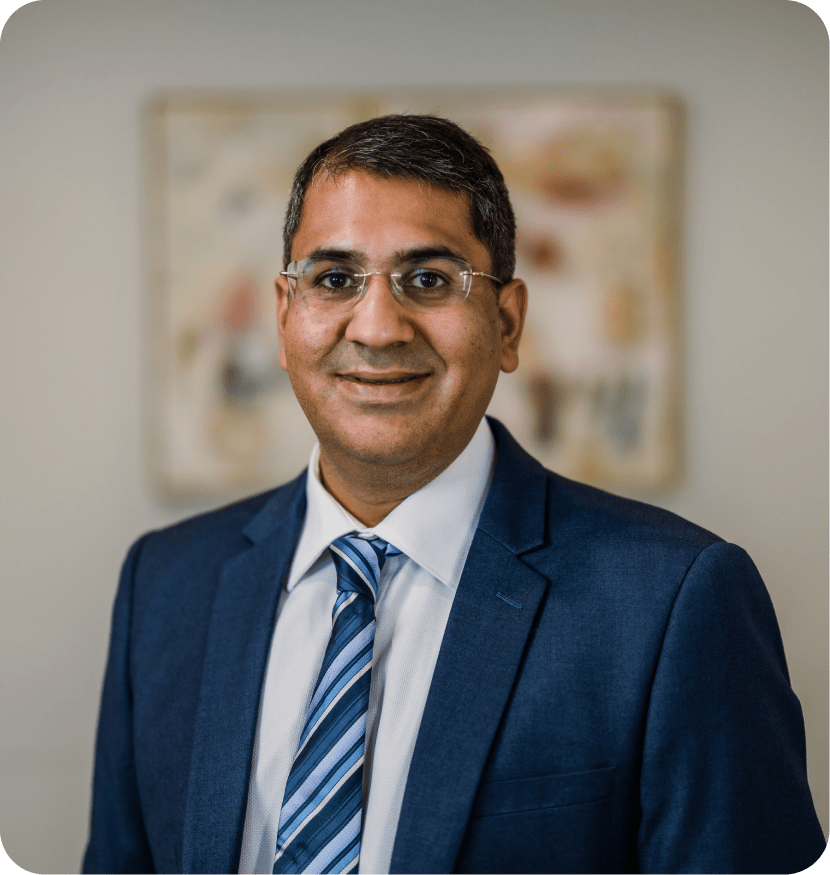
Dr Devesh Kaushal is a upper GI and general surgeon based in Liverpool who performs colonoscopy as a core part of his practice. Whether you have been referred for investigation of bowel symptoms, screening for colorectal cancer, or surveillance of a known condition such as IBD — Dr Kaushal provides a thorough, patient-centred colonoscopy service across South Western Sydney.
A colonoscopy is a procedure in which a thin, flexible tube with a high-definition camera at its tip (a colonoscope) is gently passed through the anus and advanced along the entire length of the large intestine (colon) and into the lower part of the small intestine (terminal ileum). It is performed under light IV sedation — you are comfortable and relaxed throughout with no memory of the procedure.
Unlike an X-ray or CT scan, colonoscopy allows direct visualisation of the bowel lining in real time. It also enables therapeutic procedures — removing polyps, taking biopsies, or treating bleeding — all in the same sitting.
Colonoscopy — Quick Facts
|
Dr Kaushal recommends colonoscopy when direct visualisation and assessment of the large bowel is required. Common reasons include:
Diagnostic Colonoscopy | Therapeutic Colonoscopy |
• Rectal bleeding or blood in stool • Unexplained change in bowel habits • Persistent abdominal pain or cramping • Iron deficiency anaemia • Unexplained weight loss • Positive bowel cancer screening test (FOBT) • Surveillance for IBD (Crohn’s / UC) • Family history of bowel cancer or polyps • Elevated faecal calprotectin • Colorectal cancer screening | • Polypectomy — removal of bowel polyps • Biopsy of suspicious tissue • Treatment of lower GI bleeding • Dilation of bowel strictures • Placement of stents in bowel obstruction • IBD surveillance biopsies • Marking lesions for surgical planning |
Colonoscopy is the most accurate investigation for the following conditions — providing information no other test can match:
Condition | Symptoms That Suggest It | What Colonoscopy Finds |
Colorectal Cancer | Rectal bleeding, change in bowel habits, weight loss, anaemia | Tumour or mass — biopsied to confirm malignancy and guide treatment |
Bowel Polyps | Often asymptomatic — found on screening or investigation | Raised lesions removed (polypectomy) — preventing future cancer |
Ulcerative Colitis | Bloody diarrhoea, urgency, cramping | Continuous mucosal inflammation from rectum — biopsies confirm diagnosis |
Crohn’s Disease | Abdominal pain, diarrhoea, weight loss, perianal disease | Skip lesions, deep ulcers, cobblestoning — biopsies confirm granulomas |
Diverticular Disease | Left-sided pain, altered bowel habits, rectal bleeding | Diverticular outpouchings — assess for bleeding or inflammation |
Microscopic Colitis | Chronic watery diarrhoea — normal appearance on scope | Biopsies reveal collagenous or lymphocytic colitis not visible to naked eye |
Bowel Stricture | Constipation, bloating, abdominal distension | Narrowing of bowel lumen — can be dilated at same procedure |
Angiodysplasia | Rectal bleeding, iron deficiency anaemia | Abnormal blood vessel lesions — treated with argon plasma coagulation |
Coeliac Disease (lower GI) | Diarrhoea, bloating, weight loss, anaemia | Terminal ileum biopsies — villous atrophy confirms diagnosis |
Colorectal cancer is the second most common cancer in Australia — and one of the most preventable. When detected early, the 5-year survival rate exceeds 90%. Colonoscopy is the most effective tool for both detecting and preventing bowel cancer because polyps can be found and removed before they become cancerous.
The Australian National Bowel Cancer Screening Program sends FOBT kits to all Australians aged 45–74 every 2 years. A positive result means colonoscopy is recommended — do not delay this referral. The FOBT detects blood in the stool that may be invisible to the naked eye. |
Here is exactly what happens from arrival to going home — so you know what to expect on the day.
1 | Arrival & Admission Arrive at the hospital at your specified admission time. Nursing staff confirm your identity, procedure, and bowel preparation status. An IV cannula is placed in your hand or arm. You change into a hospital gown and are settled in the pre-procedure area. |
2 | Anaesthetic Review The anaesthetic nurse or anaesthetist reviews your health history and confirms your sedation plan. Monitoring equipment is attached — ECG, blood pressure, and pulse oximetry. Final checks are made before you are taken to the procedure room. |
3 | Sedation Sedation medication is given through your IV cannula. Within seconds you feel relaxed and drowsy. Most patients have no memory of the procedure at all. You breathe independently throughout — this is not a general anaesthetic — but you are completely comfortable with no awareness of discomfort. |
4 | The Colonoscopy — 20 to 45 Minutes You are positioned on your left side. Dr Kaushal gently advances the colonoscope through the anus, along the entire colon, and into the terminal ileum. The bowel lining is carefully examined in real time on a high-definition monitor. Any polyps found are removed (polypectomy). Biopsies are taken from areas of concern or for surveillance purposes. Bleeding lesions can be treated at the same time. The procedure takes approximately 20 to 45 minutes. |
5 | Recovery — 30 to 60 Minutes You are moved to the recovery area where nursing staff monitor you as the sedation wears off. You may feel mild bloating or wind — this is normal and passes quickly. A light snack and drink are offered once you are awake. Most patients feel comfortable within 30 to 60 minutes. |
6 | Results & Discharge Dr Kaushal speaks with you and your accompanying person to discuss findings before you leave. Photographs taken during the procedure are reviewed with you. If biopsies were taken, results are typically available within 5 to 7 business days. A follow-up appointment is arranged if needed. You are discharged once you are comfortable, mobile, and have a responsible adult driver. |
A bowel polyp is a small growth on the inner lining of the colon. Most polyps are benign — but certain types (adenomatous polyps) can become cancerous over time if left untreated. Colonoscopy is the only investigation that allows polyps to be detected AND removed in the same procedure.
Patients with long-standing ulcerative colitis or Crohn’s colitis face an increased risk of colorectal cancer compared to the general population. Regular surveillance colonoscopy at appropriate intervals — with systematic biopsies — is a critical and potentially life-saving part of long-term IBD management.
Surveillance interval guidance (per Australian and international guidelines): • Low risk (limited extent, well-controlled, no dysplasia): every 5 years • Intermediate risk (extensive colitis, mild activity, no dysplasia): every 3 years • High risk (primary sclerosing cholangitis, previous dysplasia, significant activity): every 1–2 years
Dr Kaushal determines your individual surveillance interval based on your disease extent, duration, activity, and pathology results. |
The quality of your bowel preparation directly determines the quality of your colonoscopy. An inadequately prepared bowel can obscure polyps, miss lesions, and may require the procedure to be repeated. Dr Kaushal’s rooms provide detailed written preparation instructions at the time of booking.
Iron supplements must be stopped at least 5 days before colonoscopy — iron coating reduces bowel visibility significantly. Blood thinning medications (Warfarin, Pradaxa, Xarelto, Eliquis, Clopidogrel, Aspirin, Cartia, Iscover) may need to be paused — Dr Kaushal will advise you specifically. |
Upper GI & General Surgeon & Surgeon Diagnose AND treat in one specialist — no need for multiple referrals. | FRACS Qualified Fellow of the Royal Australasian College of Surgeons — highest surgical qualification in Australia. |
15+ Years Experience Extensive experience performing colonoscopy for diagnosis, polypectomy, IBD surveillance, and cancer screening. | Active Researcher Published in Annals of Surgery and international GI journals — patients benefit from latest evidence-based technique. |
Patient-Centred Care Anxious patients are particularly welcome. Dr Kaushal takes time to explain the procedure and address all concerns before the day.
GESA Recertified Dr Kaushal is GESA Recertified. | Local Liverpool Care Expert colonoscopy in Liverpool — no need to travel to the city for specialist bowel assessment. |
No. With light IV sedation the vast majority of patients experience no pain and have no memory of the procedure. Some patients feel mild cramping or bloating after the procedure as gas is expelled — this resolves within a few hours.
Bowel preparation begins 2 days before your procedure with a liquid diet, then clear fluids only the day before. The bowel prep medications are taken the afternoon and evening before. It is important to stay home on the day of preparation as you will need frequent access to a toilet.
A GP or specialist referral is required to access Medicare rebates. If you have received a positive FOBT result from the National Bowel Cancer Screening Program, take this letter to your GP for an urgent referral to Dr Kaushal. Contact the rooms on (02) 7906 8312 if you need guidance.
If a polyp is found during your colonoscopy, Dr Kaushal will remove it at the same time (polypectomy) in most cases. The polyp is sent to pathology for analysis. Results are discussed at a follow-up appointment. The pathology result and polyp characteristics determine how frequently you need surveillance colonoscopies in the future.
Biopsy results are typically available within 5 to 7 business days. Dr Kaushal’s team will contact you to discuss results and any recommended next steps. A follow-up appointment will be arranged where results require discussion or ongoing management.
Yes. Colonoscopy attracts a Medicare rebate when performed with a valid GP or specialist referral. For procedures at a private hospital, private health insurance also contributes. Contact Dr Kaushal’s rooms for a clear breakdown of expected costs before booking.
This depends on your individual circumstances. Most people with no personal or family history of bowel disease and a normal colonoscopy result do not need another for 10 years. Those with adenomatous polyps are typically recalled at 3 or 5 years depending on findings. IBD patients follow a personalised surveillance schedule. Dr Kaushal will advise you of the recommended interval based on your results.
Appointments with Dr Kaushal are available on average within 4-8 weeks Depending on the Urgency. Book online 24/7 at drdeveshkaushal.com.au or call (02) 7906 8312. For urgent referrals — such as a positive FOBT or active rectal bleeding — please call directly so the team can prioritise your booking.
Whether you have been referred by your GP, received a positive bowel cancer screening result, have a family history of colorectal cancer, or are experiencing bowel symptoms — Dr Devesh Kaushal provides expert, thorough colonoscopy care right here in Liverpool and South Western Sydney.
Contact Dr Devesh Kaushal Liverpool Consulting Rooms Phone: (02) 7906 8312 Email: [email protected] Book Online: drdeveshkaushal.com.au Office Hours: Monday – Friday, 9:00 AM – 5:00 PM Operating at: Sydney Southwest Private Hospital Liverpool | Campbelltown Public Hospital | Campbelltown Private Hospital | The George Hospital Appointments available on average within 4-8weeks | Book online 24/7 | Medicare & Private Health Insurance Accepted |
Early detection saves lives. Do not delay a colonoscopy referral — expert care is available right here in Liverpool.
Read about Colonoscopy Preparation Instructions